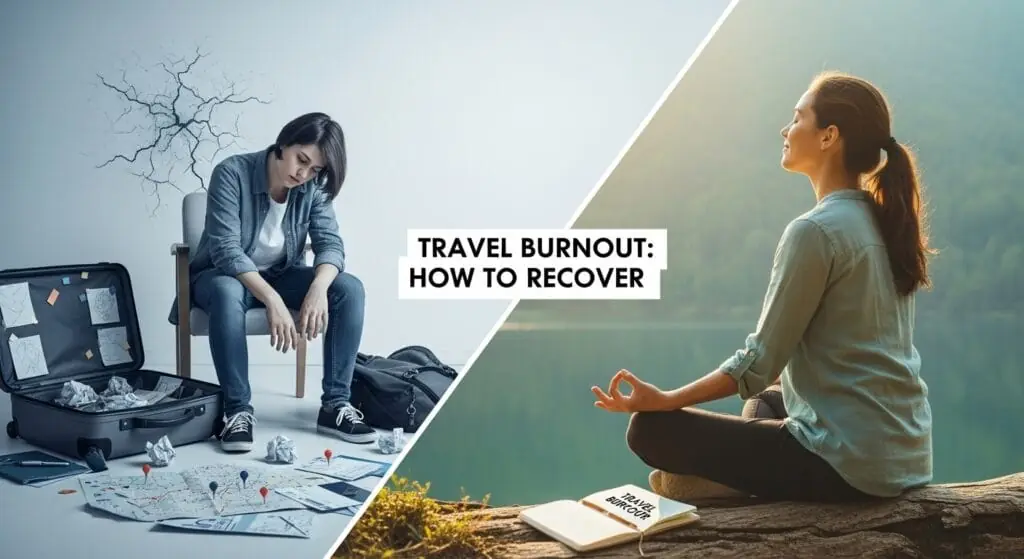
How to Avoid Bleisure Travel Burnout: Management & Health Guide
The integration of corporate assignments and personal leisure travel, widely adopted as bleisure, was originally framed as a human-capital solution to business travel fatigue. By appending vacation days, remote-work blocks, or weekend leisure excursions to mandatory business trips, professionals were presumed to enjoy enhanced work-life integration, reduced travel fatigue, and lower personal leisure travel expenses. For enterprise organizations, offering flexible trip extensions became a primary talent attraction and retention mechanism, converting grueling business mobility into an attractive workplace perk.
However, the operational reality of blended travel frequently diverges from its theoretical benefits. Rather than providing genuine cognitive recovery, poorly structured blended itineraries often compound physical exhaustion and psychological strain. When an intense three-day corporate schedule of high-stakes client meetings, negotiations, or conferences is immediately followed by several days of packed leisure itineraries, the human nervous system receives no true rest phase. Instead of returning to the office refreshed, professionals routinely experience acute physical depletion, cognitive overload, and chronic executive fatigue.
At the core of this phenomenon lies a fundamental misunderstanding of human energy management and cognitive recovery. Blended travel removes the natural boundary that historically separated professional duties from personal restorative downtime. When a traveler attempts to manage demanding work deliverables, navigate foreign urban environments, maintain asynchronous communication across conflicting time zones, and execute leisure itineraries simultaneously, the physiological and mental tax accumulates rapidly.
Understanding “how to avoid bleisure travel burnout.”

Understanding how to avoid bleisure travel burnout requires analyzing the complex intersection of human physiology, executive cognitive load, occupational psychology, and corporate mobility governance. In professional performance management, preventing burnout on blended trips is not simply a matter of packing lighter, taking a brief walk between client meetings, or adding an extra leisure day at the end of a trip. It represents a deliberate, structured framework designed to preserve cognitive capacity, protect biological recovery cycles, and maintain distinct mental boundaries between professional obligations and personal leisure.
A resilient framework for preventing blended travel burnout evaluates five structural layers:
-
The Cognitive Load Layer: Managing decision fatigue, information processing demands, and professional task switching across mixed-purpose itineraries.
-
The Physiological Alignment Layer: Regulating circadian rhythms, sleep hygiene, nutritional stability, and physical recovery windows across shifting time zones.
-
The Spatial & Environmental Layer: Selecting lodging, workspaces, and transit modes that minimize sensory overload and guarantee acoustic and ergonomic recovery.
-
The Temporal Boundary Layer: Enforcing non-negotiable temporal buffers between official business duties, active remote work, and personal leisure leave.
-
The Governance & Expectations Layer: Establishing transparent workplace communication protocols, workload adjustments, and out-of-office coverage during leisure extensions.
Deep Contextual Background
The systemic emergence of travel burnout mirrors decades of structural evolution across global commerce, corporate mobility, and information technology. In the late twentieth century, corporate business travel was defined by rigid, highly structured patterns. Travel desks booked point-to-point itineraries engineered strictly around direct business tasks, such as site visits, board meetings, or client sales calls. While physical travel during this era was demanding, the absolute technological boundary between the office and the road provided forced disconnection; once a business meeting concluded, travelers had limited ability to monitor corporate email or manage back-office task queues in real time.
Throughout the late 1990s and 2000s, the proliferation of global mobile connectivity, laptops, and enterprise cloud infrastructure eliminated these natural technological boundaries. Business travelers became continuously accessible, expected to manage daily desk work, respond to urgent communications, and maintain standard output while simultaneously navigating grueling travel schedules. Corporate travel itineraries became hyper-compressed, with travelers taking late-night flights, executing back-to-back meeting schedules across multiple cities, and returning immediately to their primary offices without recovery time.
The normalization of remote and hybrid work models fundamentally altered corporate mobility once again. Knowledge workers recognized that cloud-based workflows enabled them to execute professional duties from virtually anywhere with a high-speed internet connection. Organizations quickly embraced blended travel as a powerful recruitment and retention tool, encouraging staff to attach personal vacation days or remote-work blocks to company-funded business trips.
However, this shift exposed severe psychological and physiological vulnerabilities. The complete dissolution of spatial and temporal boundaries between work and personal life meant that business travelers no longer had distinct physical or mental spaces for recovery. Instead of reducing travel fatigue, blended travel often doubled the cognitive burden: professionals were now expected to deliver standard corporate work output, execute client meetings, and curate complex personal vacation experiences simultaneously within a single journey.
Conceptual Frameworks and Mental Models
To systematically analyze and prevent burnout across blended itineraries, frequent travelers, corporate mobility managers, and executive coaches can utilize four core mental models. These frameworks isolate physiological and psychological variables, helping individuals design resilient travel schedules.
1. The Cognitive Energy & Recovery Buffer Model
This model organizes a blended travel itinerary into three distinct physiological phases based on cognitive demand:
-
Phase 1: High Cognitive Demand (Business Segment) – Client negotiations, public speaking, intensive networking, or strategic work blocks requiring high focus.
-
Phase 2: The Decompression Buffer (Restorative Transition) – A mandatory 12-to-24-hour period characterized by low sensory stimulation, high sleep priority, zero active sightseeing, and minimal decision-making.
-
Phase 3: Active Leisure Segment (Personal Extension) – Cultural immersion, physical recreation, or family activities.
-
Application: Prevents direct transition from Phase 1 to Phase 3, ensuring the nervous system down-regulates before engaging in active leisure pursuits.
-
Limitations: Requires adding an additional night or adjusting flight schedules, which may increase personal accommodation costs or require clear corporate policy allowances.
2. The Circadian Displacement Matrix
This framework evaluates the physiological stress imposed on a traveler by combining travel time-zone shifts with schedule intensity.
-
Application: Categorizes trips based on direction and duration:
-
Low Strain (0–2 hours shift, < 3 days): Minimal circadian disruption; standard schedule intensity permitted.
-
Moderate Strain (3–5 hours shift, Eastbound/Westbound): Requires a 24-hour adaptation buffer before high-stakes meetings or intense personal leisure activities.
-
High Strain (6+ hours shift, Eastbound transoceanic): Mandates strict light exposure protocols, sleep phase shifting, and zero high-intensity personal activities during the first 48 hours.
-
-
Limitations: Individual biological tolerance to circadian shift varies based on age, fitness levels, and underlying sleep health.
3. The Decision Fatigue Spectrum
This framework measures the total volume of daily operational decisions required during a trip, identifying cumulative mental depletion.
-
Application: Classifies travel activities along a spectrum from “High Decision Density” (navigating unfamiliar public transit, self-guiding through foreign cities, choosing restaurants on the go, managing complex group logistics) to “Low Decision Density” (pre-booked structured tours, familiar accommodations, pre-arranged ground transport, predictable dining).
-
Limitations: Over-structuring an itinerary to reduce decision fatigue can diminish personal spontaneous enjoyment during personal leave extensions.
4. The Boundary Encroachment Model
This model measures the degree to which professional communication channels infringe upon personal leisure time during trip extensions.
-
Application: Assesses work-leisure separation across three policy tiers: Permeable (checking emails continuously during personal days), Semi-Permeable (designated 30-minute daily emergency check-ins), and Impermeable (complete digital disconnect with full out-of-office delegate coverage).
-
Limitations: Requires true team redundancy and supportive organizational culture; difficult to enforce for single-point-of-failure roles or senior executives.
Key Categories or Variations
When structuring blended travel, professionals and organizations utilize several distinct trip configurations. Each variation carries distinct cognitive, physiological, and logistical trade-offs.
| Blended Travel Architecture | Target Profile | Burnout Risk Factor | Primary Cognitive Strain | Recommended Recovery Mechanism |
| Pre-Business Leisure Warm-Up | High-Stakes Presenters, Negotiators | Low to Moderate | Early flight fatigue; anxiety about upcoming business meetings | Strict separation of work tasks during initial leisure days |
| Post-Business Leisure Extension | Conference Attendees, Sales Teams | High | Cumulative cognitive depletion from business meetings bleeding into leisure. | Mandatory 24-hour low-stimulation decompression buffer |
| Mid-Trip Interstitial Work Block | Extended Remote Knowledge Workers | Maximum | Boundary dissolution; chronic task switching; constant work anxiety | Dedicated, immovable work hours paired with full disconnect blocks |
| Companion / Family Accompaniment | Executives, Senior Managers | High | Multi-role management friction (balancing professional focus with family expectations) | Explicit schedule boundaries and private workspace allocation |
| Hub-and-Spoke Regional Exploration | Project Consultants, Regional Leads | Moderate to High | High transit friction; frequent packing/unpacking; decision fatigue | Utilizing a single fixed accommodation base for the entire trip |
1. Pre-Business Leisure Warm-Up
Arriving at a destination 2 to 3 days prior to the start of official business obligations to engage in personal leave.
-
Strengths: Allows the traveler to overcome jet lag and circadian displacement before high-stakes business meetings begin; establishes a calm emotional state.
-
Weaknesses: Background anxiety regarding upcoming corporate presentations can undermine personal leisure enjoyment.
2. Post-Business Leisure Extension
Adding personal vacation days or weekend leave immediately following the conclusion of official corporate duties.
-
Strengths: Capitalizes on existing company-funded long-distance transport; provides immediate celebration or relief after completing business tasks.
-
Weaknesses: High risk of physical and mental exhaustion if the traveler transitions directly from high-stress meetings into active sightseeing without a rest buffer.
3. Mid-Trip Interstitial Work Blocks
Interspersing full-time remote work days between personal leisure days during an extended stay at a single destination.
-
Strengths: Enables extended stays in desirable destinations without taking excessive formal vacation time.
-
Weaknesses: Extreme risk of boundary dissolution, where the traveler feels they are neither fully resting nor fully focused on work, leading to chronic low-grade anxiety.
4. Companion / Family Accompaniment
Inviting a spouse, partner, or family members to join the traveler during a business trip, combining corporate duties with family vacation time.
-
Strengths: Reduces personal isolation, enhances family connection, and optimizes family travel budgets through shared accommodation.
-
Weaknesses: Creates significant role conflict, as the traveler must balance demanding corporate commitments with family expectations and social logistics.
Realistic Decision Logic
Selecting the optimal travel architecture depends on personal physiological baseline, workload intensity, and trip complexity. The decision logic below outlines the recommended path:
-
Does the business segment involve high-stakes negotiations, public speaking, or intense multi-day client meetings?
-
Yes: Prioritize a Pre-Business Leisure Warm-Up or insert a mandatory 24-hour low-stimulation rest buffer before launching a Post-Business Leisure Extension.
-
No: Proceed to Step 2.
-
-
Will the trip cross three or more time zones?
-
Yes: Apply the Circadian Displacement Matrix, scheduling low-activity recovery days immediately following arrival and restricting active leisure pursuits during the first 48 hours.
-
No: Proceed to Step 3.
-
-
Are non-employee family members or companions joining the trip?
-
Yes: Establish explicit, written daily schedules separating corporate duties from family leisure, and book accommodation featuring distinct private workspace zones.
-
No: Utilize a Hub-and-Spoke Regional Model from a single lodging base to minimize packing, unpacking, and local transit friction.
-
Detailed Real-World Scenarios
The practical performance of blended travel frameworks is best evaluated through real-world operational scenarios that highlight physiological constraints, decision points, and failure modes.
The Transoceanic Conference Extension Failure
-
Context: A senior product manager based in Chicago travels to London for a four-day international tech conference, extending their stay through the following Tuesday for a personal vacation in the UK countryside.
-
Constraints: The conference schedule involves 10-hour daily commitments, networking dinners until late evening, and continuous messaging with Chicago teams during late UK hours.
-
Decision Points: The product manager schedules an early morning rental car pickup on Friday immediately following the conference, planning a dense four-day driving tour of remote coastal villages.
-
Failure Mode: On Friday morning, severely sleep-deprived and cognitively depleted from four days of intensive networking and a 6-hour time-zone shift, the product manager attempts a three-hour drive on unfamiliar roads. Chronic fatigue results in severe mental fog, an inability to enjoy the scenery, and an overwhelming desire to stay in the hotel room.
-
Second-Order Effects: The manager spends three days of personal leave sleeping in foreign hotels, returns to Chicago thoroughly exhausted, and experiences a three-week productivity slump at work.
The Remote Workation Boundary Collapse
-
Context: A lead software architect travels from San Francisco to Austin, Texas, for a three-day corporate summit. They extend their stay for ten days to work remotely from a trendy lifestyle hotel while exploring the city during evenings.
-
Constraints: The architect maintains standard Pacific Time working hours while in the Central Time zone, managing live software deployments while attempting to attend evening dinners and live music events.
-
Decision Points: The architect keeps corporate communication channels (Slack, email) permanently active on their personal smartphone during evening social outings.
-
Failure Mode: While attending an evening concert, an automated server alert triggers on the architect’s phone. The architect spends two hours resolving code issues from a noisy venue, experiencing acute stress and ruining the personal evening outing.
-
Second-Order Effects: The line between work and leisure completely dissolves. The architect experiences persistent anxiety during all personal outings, returning home feeling as if they worked a 14-day continuous shift without any real break.
Structured Recovery and Boundary Discipline
-
Context: A corporate management consultant travels from New York to Zurich for client meetings ending Thursday afternoon. They plan a three-day personal weekend extension in the Swiss Alps before flying home Monday.
-
Constraints: The consulting engagement is intensely demanding, involving multi-party contract negotiations.
-
Decision Points: The consultant books a quiet, wellness-focused hotel in a small alpine village for Thursday night, establishing a strict “Zero Activity / Digital Disconnect” rule from Thursday 6:00 PM to Friday 6:00 PM. They configure an out-of-office auto-responder and assign a colleague back in New York as emergency coverage.
-
Outcome: On Thursday evening and Friday, the consultant engages in low-stimulation activities: sleep, walking, sauna, and quiet reading, keeping their smartphone in airplane mode. By Saturday morning, physiological fatigue has significantly subsided, allowing the consultant to enjoy two days of active alpine hiking with high energy.
-
Key Insight: Inserting a non-negotiable 24-hour low-stimulation rest buffer between corporate duties and active personal leave enabled true nervous system recovery, resulting in high personal satisfaction and a refreshed return to work.
Planning, Cost, and Resource Dynamics
Preventing burnout across blended travel requires analyzing physical, cognitive, and financial resource allocation. Attempting to reduce personal travel costs by selecting budget accommodations or hyper-compressed transport arrangements often increases physical friction, leading to severe fatigue and reduced performance.
| Travel Resource Variable | Low-Friction / High-Recovery Configuration | High-Friction / High-Burnout Configuration | Financial & Operational Trade-offs |
| Accommodation Selection | Quiet rooms, blackout curtains, verified ergonomic desks, on-site dining | Highway-adjacent budget motels, noisy party districts, non-ergonomic seating | Higher nightly accommodation rates offset by superior sleep quality and productivity |
| Flight Routing & Timing | Mid-day non-stop flights, reasonable layovers, pre-booked airport transfers | Red-eye flights, multi-stop connections, late-night public transit navigation | Higher airfare premiums balanced against preserved sleep cycles and reduced fatigue. |
| Leisure Itinerary Density | Maximum 1 primary activity per day, open unstructured time blocks | Packed hour-by-hour schedules, multi-city transfers, heavy sightseeing | Reduced activity volume yields higher emotional relaxation and cognitive recovery |
| Digital Disconnection Level | Full out-of-office status, delegate coverage, smartphone work apps muted | Continuous email monitoring, live messaging availability, checking work feeds | Requires organizational trust and team coverage; eliminates work-related anxiety |
Direct vs. Indirect Resource Investments
-
Direct Financial Investments: Booking non-stop flights, selecting premium quiet hotel rooms, paying for private ground transport, and funding dedicated co-working spaces or ergonomic lodging.
-
Indirect Cognitive Investments: Reserving unscheduled time blocks, declining non-essential social or networking invitations during travel, and spending time configuring thorough out-of-office coverage delegates.
-
Opportunity Costs: Choosing a relaxed, low-density personal leisure schedule means seeing fewer tourist attractions per trip, but preserves physical health, mental clarity, and long-term professional productivity.
Tools, Strategies, and Support Systems
Managing personal energy and preventing exhaustion across complex blended itineraries requires deploying practical strategies, technology systems, and personal routines.
1. Circadian Realignment & Light Management Apps
Specialized mobile applications (such as Timeshifter) that utilize algorithmic sleep and light-exposure protocols tailored to specific flight itineraries.
-
Operational Value: Provides precise schedules for seeking light, avoiding light, taking melatonin, and sleeping to accelerate biological adaptation to new time zones.
-
Limitations: Requires strict personal discipline to follow light avoidance and sleep schedules amidst busy travel itineraries.
2. Acoustic Isolation & Noise Management Systems
Active noise-canceling (ANC) over-ear headphones paired with white-noise or pink-noise soundscapes used during transit and hotel stays.
-
Operational Value: Drastically reduces sensory overstimulation and auditory fatigue caused by aircraft engine noise, crowded terminals, and urban hotel environments.
-
Limitations: Cannot eliminate high-frequency transient noises or physical vibrations.
3. Pre-Trip Environmental Vetting Protocols
Systematic verification of hotel room acoustic insulation, HVAC noise levels, blackout curtain quality, and bed ergonomics using traveler review databases or direct property inquiries.
-
Operational Value: Guarantees high-quality sleep conditions, eliminating the fatigue caused by poor hotel environments.
-
Limitations: Property-reported amenities can occasionally differ from actual room conditions upon arrival.
4. Rigid Digital Perimeter Controls
Utilizing mobile device management features to temporarily hide, block, or mute enterprise communication applications (e.g., Slack, Teams, Outlook) during personal leave days.
-
Operational Value: Removes the visual triggers and micro-notifications that maintain low-grade work anxiety during personal time.
-
Limitations: Requires setting clear expectations with colleagues and securing a trusted out-of-office delegate.
5. Structured Rest-to-Activity Ratios
Enforcing a strict operational rule that limits active sightseeing or recreational pursuits to a maximum of 4 to 5 hours per personal leave day, reserving remaining hours for unstructured rest.
-
Operational Value: Prevents personal leisure extensions from becoming physically exhausting, preserving energy for the return to work.
-
Limitations: Requires resisting the psychological urge to maximize sightseeing volume in new destinations.
Risk Landscape and Failure Modes
Failing to manage fatigue during blended travel creates a complex risk profile that affects individual health, professional performance, and corporate compliance.
1. Physiological Failure Modes
-
Immune Suppression: Combining long-distance transit, sleep deprivation, and dense business/leisure schedules suppresses immune function, increasing susceptibility to acute viral infections.
-
Circadian Dysregulation: Frequent cross-time-zone travel without adequate rest windows leads to chronic gastrointestinal disruption, metabolic dysfunction, and persistent insomnia.
2. Psychological and Cognitive Failure Modes
-
Severe Decision Fatigue: Navigating new physical environments continuously while processing corporate information exhausts executive function, leading to irritability, poor judgment, and memory lapses.
-
Anhedonia and Emotional Depletion: Chronic physical exhaustion prevents the traveler from experiencing pleasure or satisfaction during personal leisure activities, resulting in feelings of emotional emptiness.
3. Occupational and Relational Failure Modes
-
Post-Trip Productivity Slump: Returning to the primary job in a state of severe exhaustion causes multi-week drops in work output, missed deadlines, and strained colleague relationships.
-
Companion / Family Friction: Attempting to conduct work calls or manage professional stress while traveling with family creates interpersonal conflict and domestic dissatisfaction.
Governance, Maintenance, and Long-Term Adaptation
Preventing travel-related exhaustion across a career requires establishing sustainable personal habits, monitoring physical recovery signals, and enforcing clear personal guidelines.
Personal Travel Governance Protocol
-
The 3-to-1 Travel Ratio: For every 3 days of high-intensity corporate travel, mandate at least 1 full day of low-stimulation rest before resuming standard work or heavy leisure schedules.
-
Pre-Approved Out-of-Office Coverage: Never begin a personal leave extension attached to a business trip without formally assigning an operational delegate to handle urgent work matters.
-
Immovable Rest Anchors: Lock in non-negotiable sleep windows (e.g., 8 hours of continuous in-bed time) on every travel itinerary, regardless of social or leisure opportunities.
Implementation Checklist for Blended Travelers
-
Itinerary Buffer Audit: Confirm that a 12-to-24-hour low-activity rest buffer is scheduled between the end of business meetings and the start of active leisure pursuits.
-
Accommodation Vetting: Verify that lodging in personal extensions offers verified quiet room options, effective blackout curtains, and comfortable bedding.
-
Digital Boundary Setup: Configure out-of-office auto-responders, assign emergency delegates, and mute work notification channels for personal leave days.
-
Circadian Plan Integration: Input flight details into a circadian management app and prepare light-exposure protocols for time-zone shifts.
-
Activity Density Cap: Cap planned leisure activities at a maximum of one primary event per personal extension day.
-
Companion Expectations: Review and agree upon explicit daily schedules with traveling companions, defining clear boundaries between working hours and family time.
Measurement, Tracking, and Evaluation
Evaluating personal recovery and burnout risks requires monitoring both objective physiological data and subjective psychological signals.
| Indicator Category | Signal Description | Strategic Purpose & Value |
| Objective Physiological Signal | Heart Rate Variability (HRV) and Resting Heart Rate (RHR) trends via wearables | Measures autonomic nervous system recovery and physiological stress levels |
| Objective Sleep Metric | Deep sleep and REM sleep duration scores across travel days | Tracks actual restorative sleep quality versus time spent in bed |
| Leading Subjective Indicator | Self-reported decision fatigue and irritability scales upon waking | Flags cognitive depletion before it manifests in severe emotional burnout |
| Lagging Performance Metric | Post-trip work task completion rates during the first 5 days back | Measures actual cognitive recovery and professional performance restoration |
| Relational Quality Metric | Subjective satisfaction scores regarding family/companion interactions | Evaluates whether companion accompaniment enhanced or strained personal relationships |
Lead vs. Lag Recovery Indicators
-
Leading Indicators (such as declining HRV scores or rising morning resting heart rate) alert the traveler to physiological strain during the trip, signaling an immediate need to reduce leisure activity density or increase sleep duration.
-
Lagging Metrics (such as post-trip work task completion rates or multi-week productivity drops) reveal whether a specific trip architecture was sustainable or resulted in net cognitive depletion.
Common Misconceptions and Oversimplifications
Preventing burnout on blended travel requires addressing several widespread myths held by business travelers and corporate leaders alike.
- Myth 1: “Adding personal leisure days to a business trip always reduces overall travel stress.”
- Correction: Adding active, high-density leisure activities to an already exhausting business schedule increases total physical and cognitive demands. Leisure extensions reduce stress only if they incorporate low-stimulation rest buffers and strict digital boundaries.
- Myth 2: “Working remotely from a scenic resort destination feels just like taking a vacation.”
- Correction: Conducting full-time knowledge work from a resort environment maintains standard cognitive stress while introducing location disruption and boundary confusion. A “workation” is a working arrangement, not a restorative vacation.
- Myth 3: “A high-end hotel spa treatment or luxury meal is sufficient to recover from heavy business travel.”
- Correction: Passive luxury perks cannot offset chronic sleep deprivation, circadian disruption, or severe decision fatigue. Physiological recovery requires fundamental biological inputs: dark, quiet sleep environments, circadian light alignment, and low sensory stimulation.
- Myth 4: “Checking work emails for just 10 minutes a day during personal leave extensions keeps stress manageable.”
- Correction: Micro-checking communication channels maintains constant sympathetic nervous system activation, preventing the brain from achieving true psychological detachment and restorative recovery.
Ethical, Practical, or Contextual Considerations
Designing sustainable blended travel practices requires recognizing broader organizational context, role dynamics, and personal life stages.
Workplace Culture and Out-of-Office Respect
In many high-pressure corporate environments, an unwritten culture of constant availability creates implicit pressure on employees to monitor communications during personal extensions.
-
Practical Approach: Enterprise leaders must actively model boundary discipline by refraining from sending non-urgent communications to traveling staff during personal leave days and enforcing formal delegate systems.
Personal Life Stage and Individual Energy Baselines
Travel recovery capacity varies significantly across individuals based on age, underlying physical health, family responsibilities, and neurological profiles.
-
Practical Approach: Travelers must avoid comparing their recovery speed to colleagues, designing customized travel itineraries that match their individual physiological needs rather than adopting standardized itineraries.
Conclusion
The evolution of modern corporate mobility offers unprecedented flexibility, allowing professionals to combine demanding corporate work with enriching personal travel. However, mastering how to avoid bleisure travel burnout requires moving past the naive assumption that combining work and vacation automatically enhances well-being. Preventing chronic fatigue, cognitive depletion, and professional burnout demands treating travel energy management as a serious operational discipline.
Achieving sustainable mobility requires aligning cognitive pacing, physiological circadian support, strict digital perimeter controls, low-density leisure planning, and clear organizational boundaries. By inserting mandatory recovery buffers between corporate commitments and active leave, vetting travel environments for quiet sleep, and enforcing total digital detachment during personal days, travelers can enjoy the full restorative benefits of blended travel.